Structural and Compositional Disorder as Design Tools for Next-Generation Inorganic Materials: Scientific Seminar and Webinar under the GlaCerHub Project
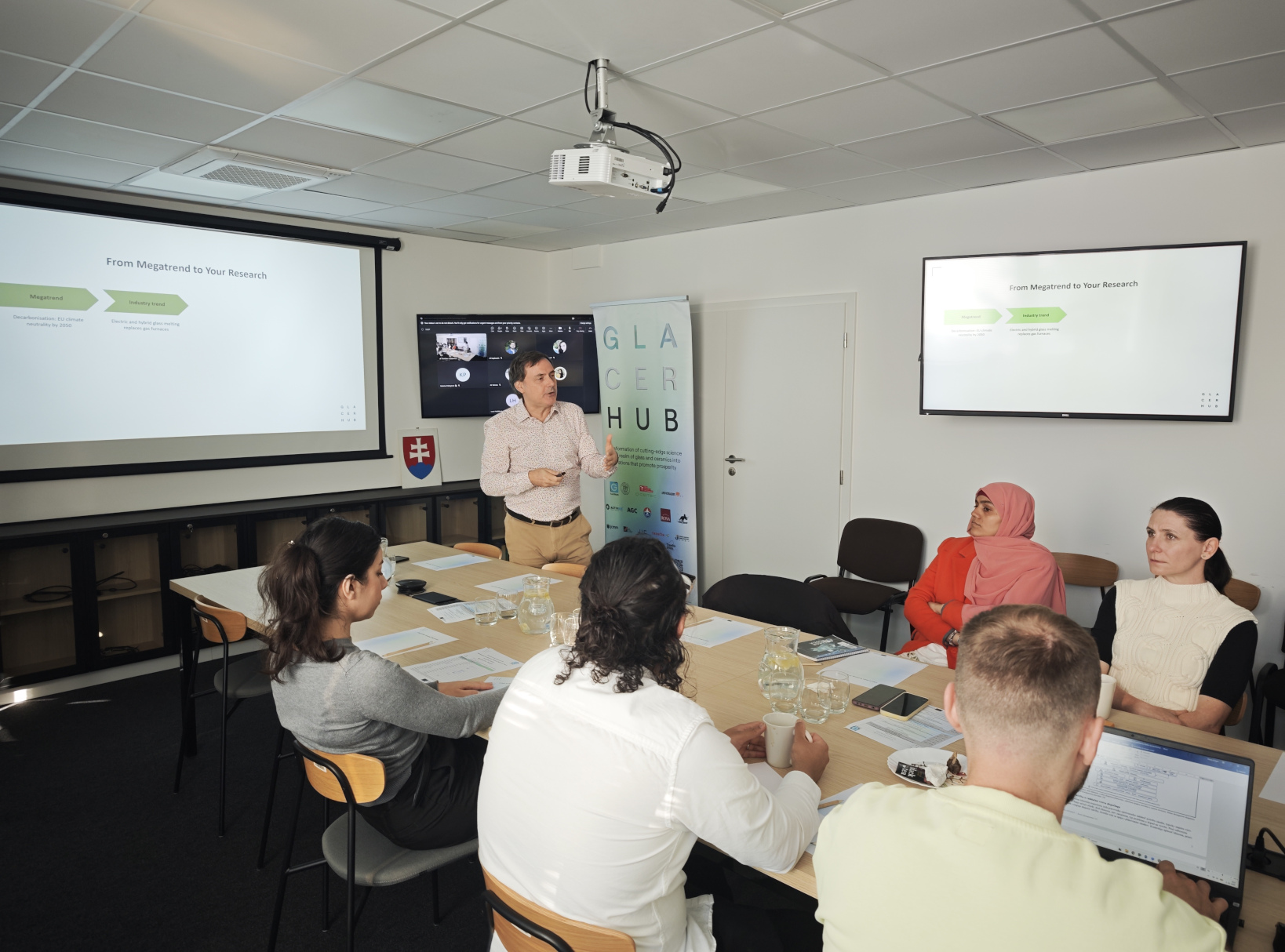
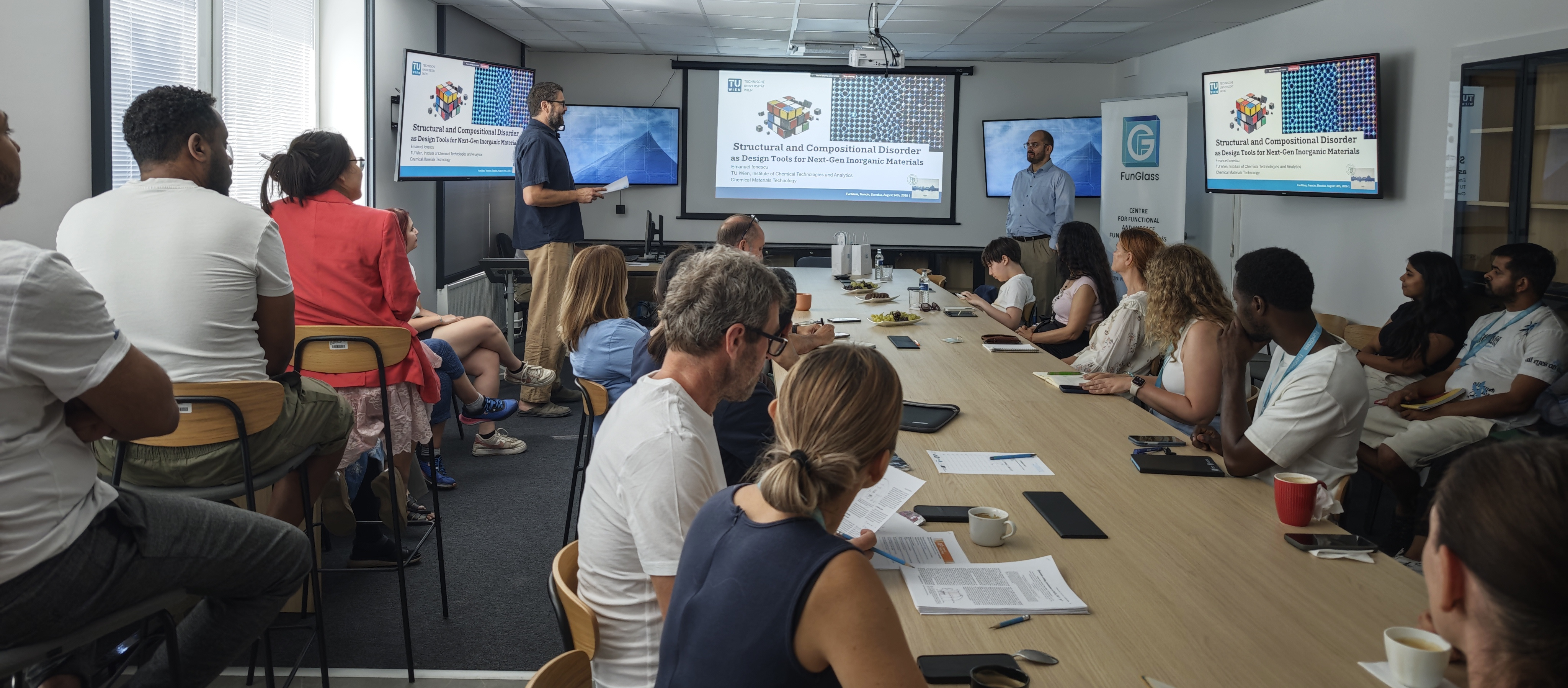
On 14 August 2026, the FunGlass Centre at Alexander Dubček University of Trenčín hosted a scientific seminar entitled “Structural and Compositional Disorder as Design Tools for Next-Generation Inorganic Materials”, delivered by Prof. Emanuel Ionescu. The event was organised with the support of the GlaCerHub project and was also streamed online, enabling participation from GlaCerHub consortium partners and members of the wider scientific community.
Emanuel Ionescu is Full Professor of Chemical Materials Technology at TU Wien – Institute of Chemical Technologies and Analytics. His research focuses on the synthesis and processing of advanced ceramic and functional materials, including polymer-derived ceramics, compositionally complex ceramics, materials for extreme environments, and functional materials for energy, sensing, and catalytic applications.
During the seminar, Prof. Ionescu explored how structural and compositional disorder can be deliberately engineered as a powerful tool for designing next-generation inorganic materials. He presented recent developments in polymer-derived ceramics with advanced sensing capabilities and discussed compositionally complex ceramics that offer enhanced thermal stability and mechanical performance.
.jpg)
Particular attention was also given to the potential of these materials for circular materials design, highlighting how controlled complexity and disorder can contribute to the development of innovative materials with improved performance and functionality.
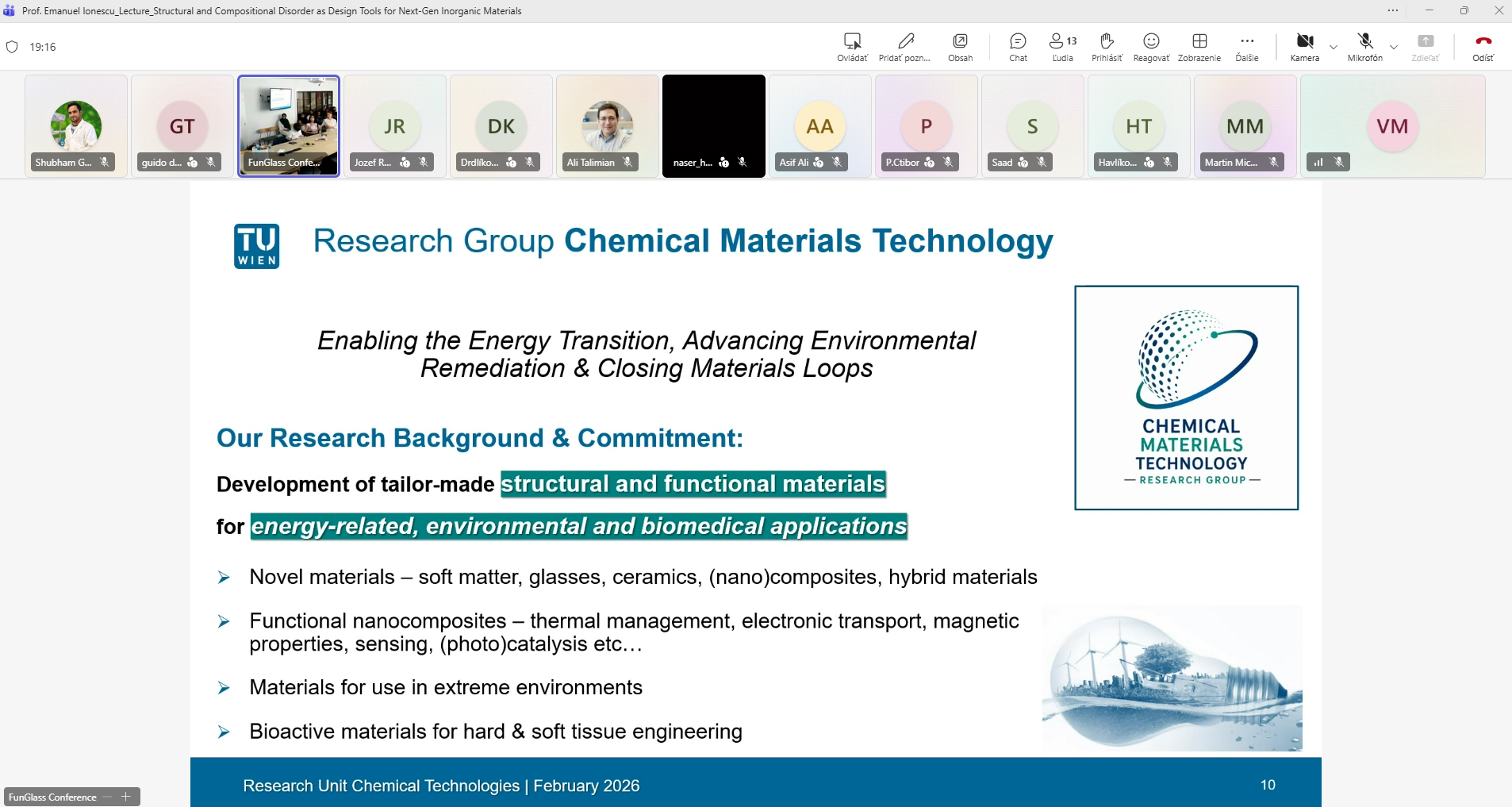
The seminar provided participants with valuable insights into emerging approaches in advanced ceramic materials research and created an opportunity for scientific exchange between researchers within the GlaCerHub network and the broader materials science community.
Other news
all news