CEITEC BUT Researchers Present Advanced Multifunctional Ceramics at ACA XIV in Belgrade
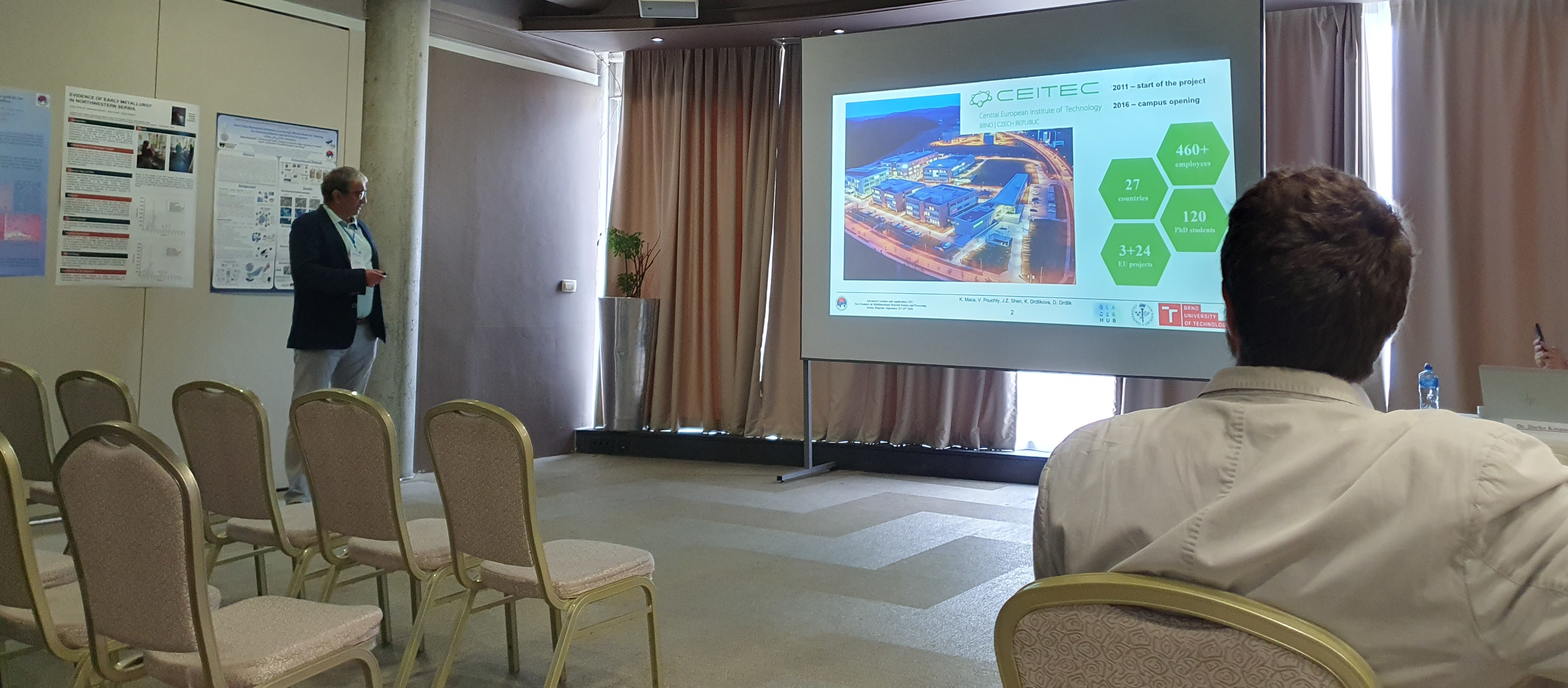
From 21 to 23 September 2026, four researchers from the Advanced Multifunctional Ceramics research group at CEITEC BUT participated in the 14th Serbian Ceramic Society Conference “Advanced Ceramics and Application XIV – New Frontiers in Multifunctional Material Science and Processing” in Belgrade. The international meeting brought together researchers working across advanced ceramic science, sintering, multifunctional materials, modelling, electroceramics and related fields.
Strong CEITEC BUT presence in the scientific programme
The CEITEC BUT team of Advanced Multifunctional Ceramics research group – contributed one plenary lecture and three invited lectures.
Prof. Karel Maca presented the plenary lecture High Temperature Dilatometry as a Tool for Sintering Studies, showing how dilatometry can be used not only to determine thermal expansion, but also to monitor sintering shrinkage and analyse sintering kinetics through advanced modelling approaches. Prof. Maca also served as a member of the conference Scientific Committee.
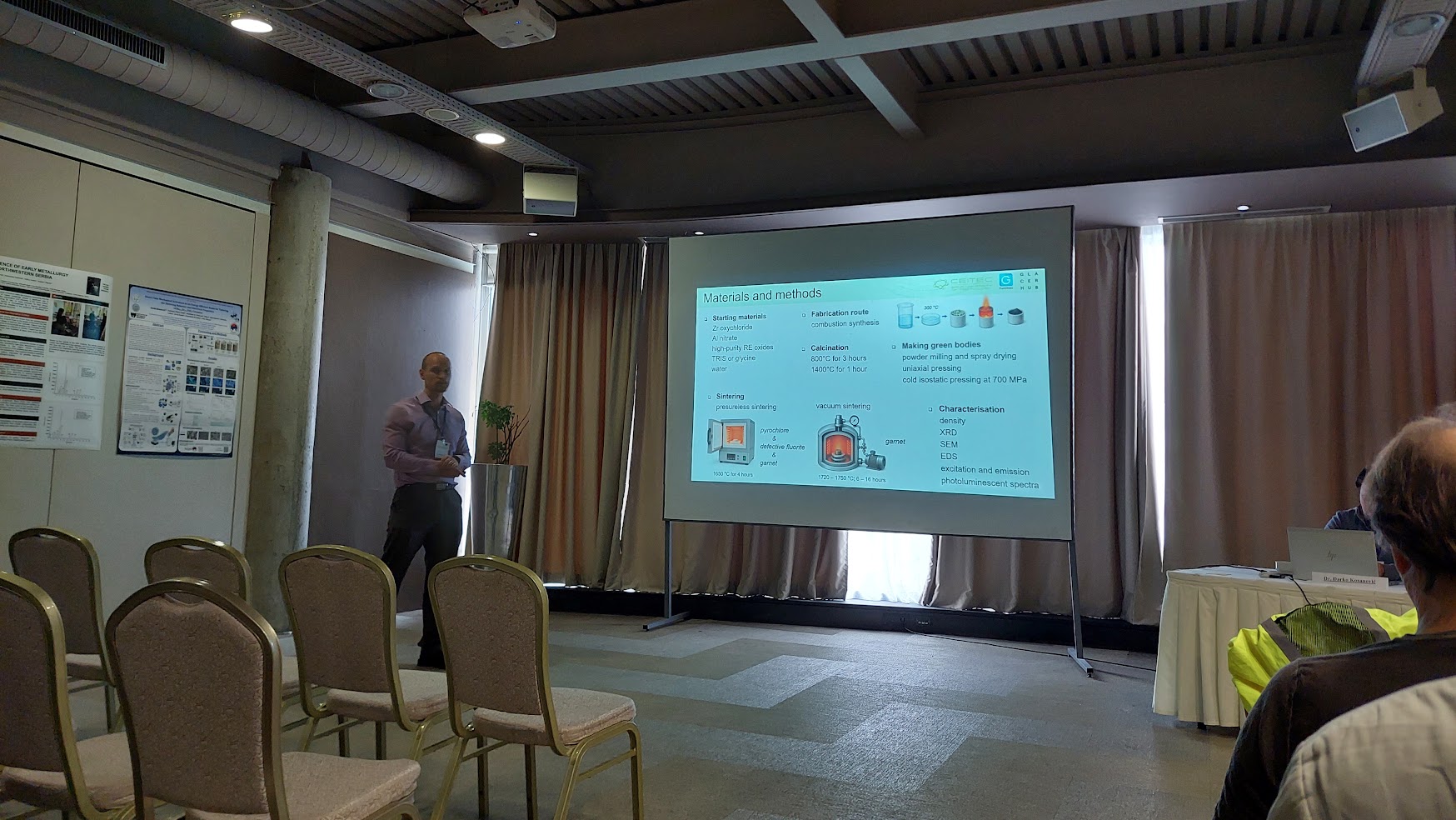
Daniel Drdlík delivered the invited lecture Multi-Component Oxide Ceramics: Effects of Chemical Composition, Disorder and Microstructure on Optical Properties. The contribution focused on high-entropy oxide ceramics and the role of controlled chemical and structural disorder in tailoring photoluminescent properties. The work is especially relevant to GlaCerHub because it brings together researchers from CEITEC BUT and FunGlass, demonstrating the scientific collaboration developed between the Czech and Slovak partners.
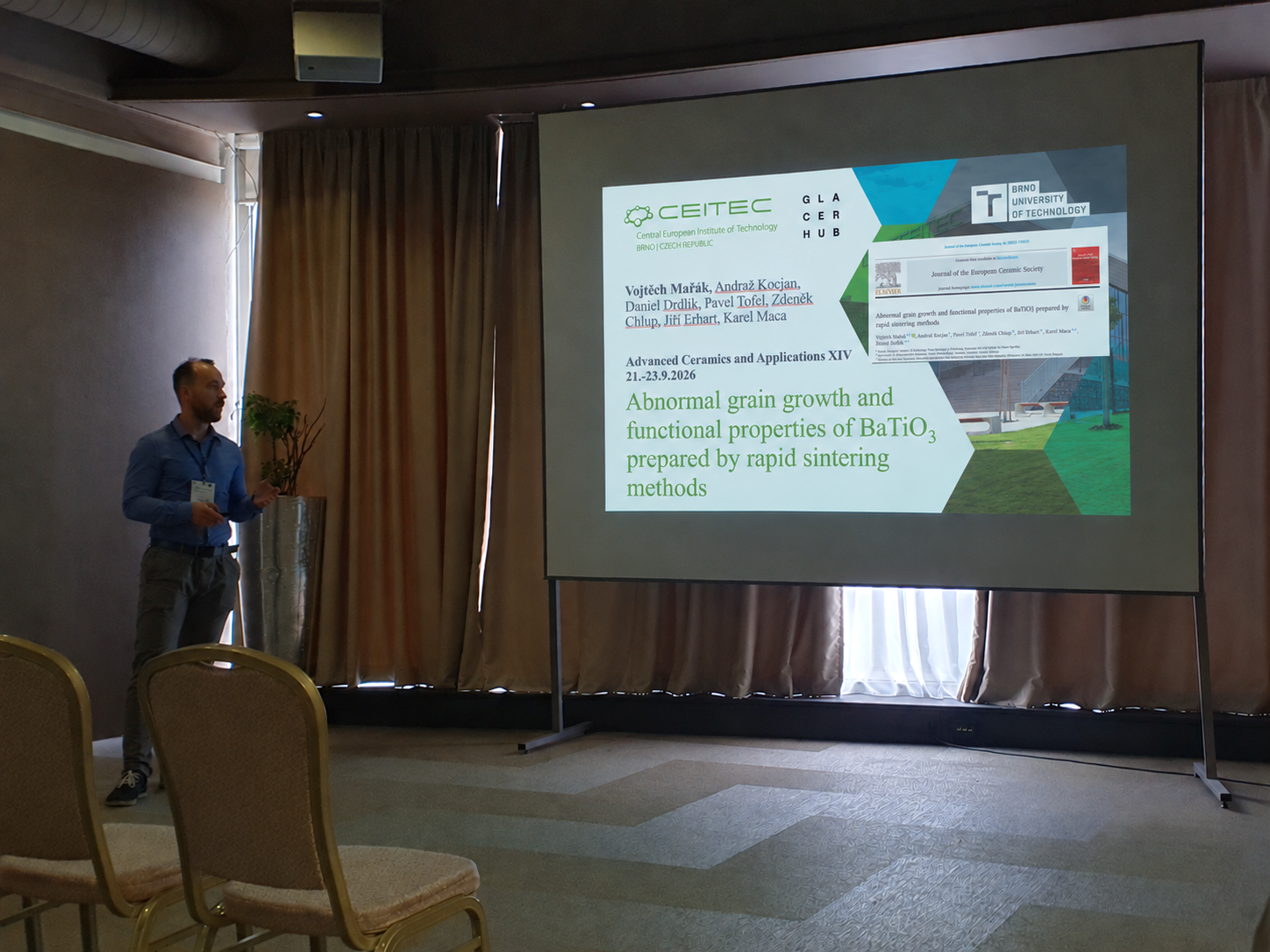
Vojtěch Mařák presented Abnormal Grain Growth and Functional Properties of BaTiO3 Prepared by Rapid Sintering Methods. His contribution addressed rapid and energy-efficient processing of BaTiO3, a key lead-free electroceramic, and showed how rapid sintering routes can achieve high density within short processing times while allowing control over dielectric and piezoelectric properties.
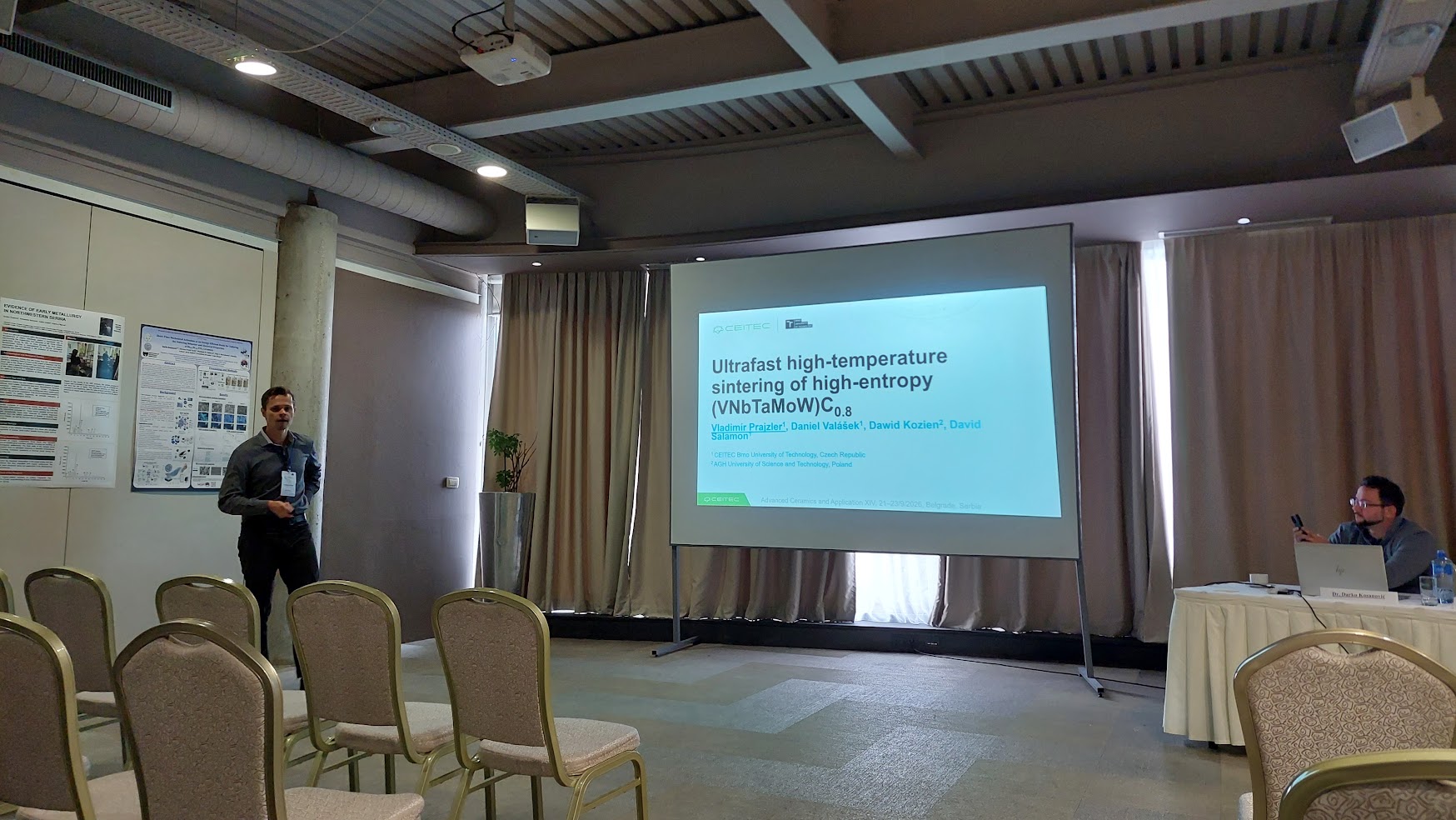
Vladimír Prajzler presented the invited lecture Ultrafast High-Temperature Sintering of High-Entropy (VNbTaMoW)C0.8. The study explored ultrafast high-temperature sintering as a route for producing dense high-entropy carbide ceramics. Densification above 95% was achieved within only 30 seconds, highlighting the potential of ultrafast processing for advanced ultra-high-temperature ceramic components.
GlaCerHub collaboration represented in Belgrade
The conference programme also included a plenary lecture by Prof. Dušan Galusek from FunGlass, the coordinating institution of GlaCerHub, entitled Cold Sintering of Glass. Together with the joint CEITEC BUT–FunGlass contribution presented by Daniel Drdlík, this provided another visible example of the scientific links between the project partners and their complementary expertise in advanced ceramics and glass.
Beyond the scientific presentations, the meetings in Serbia also supported new opportunities for international cooperation. Discussions with the group of Vladimir Srdić opened possibilities for future joint calls and joint experimental work in the electrical characterisation of lead-free piezoceramics. The trip also brought an invitation from Katalin Balázsi for a potential short-term scientific mission to a microscopy centre in Budapest, which could provide access to advanced transmission electron microscopy for future research activities.
Participation in ACA XIV therefore provided not only an opportunity to present current results from the Advanced Multifunctional Ceramics group, but also to strengthen international contacts, explore new experimental cooperation and identify opportunities for future joint research. These activities directly support the broader GlaCerHub ambition to connect excellent research teams and build long-term cooperation across the European advanced ceramics and glass community.
Other news
all news