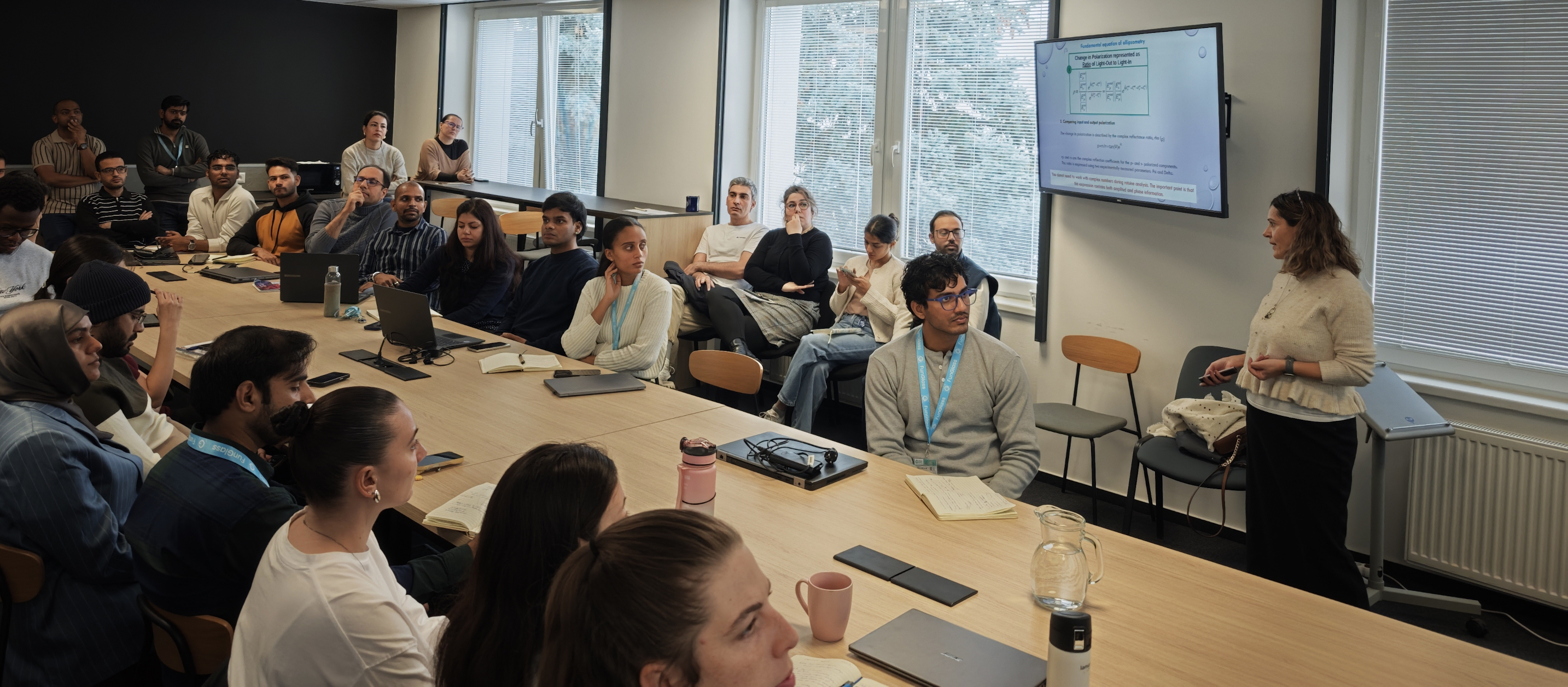
Training Course and Webinar on Ellipsometry
Webinar Led by Dr. Yolanda Castro Martín – delivered with the Support of the GlaCerHub Project
We were delighted to welcome Dr. Mª Yolanda Castro Martín from the Institute of Ceramics and Glass (ICV), Spanish National Research Council (CSIC), Spain, who delivered a specialised Ellipsometry Training Course from 27 to 29 October 2026, organised thanks to the support of the GlaCerHub project.
As part of the GlaCerHub training activities, Dr. Castro Martín was invited to the FunGlass Centre at Alexander Dubček University of Trenčín to share her expertise with PhD students and researchers. The training consisted of two days of in-person theoretical and practical sessions (27–28 October), followed by an online webinar on 29 October, which was open to the wider GlaCerHub consortium and members of the Slovak and Czech Local Chapters.
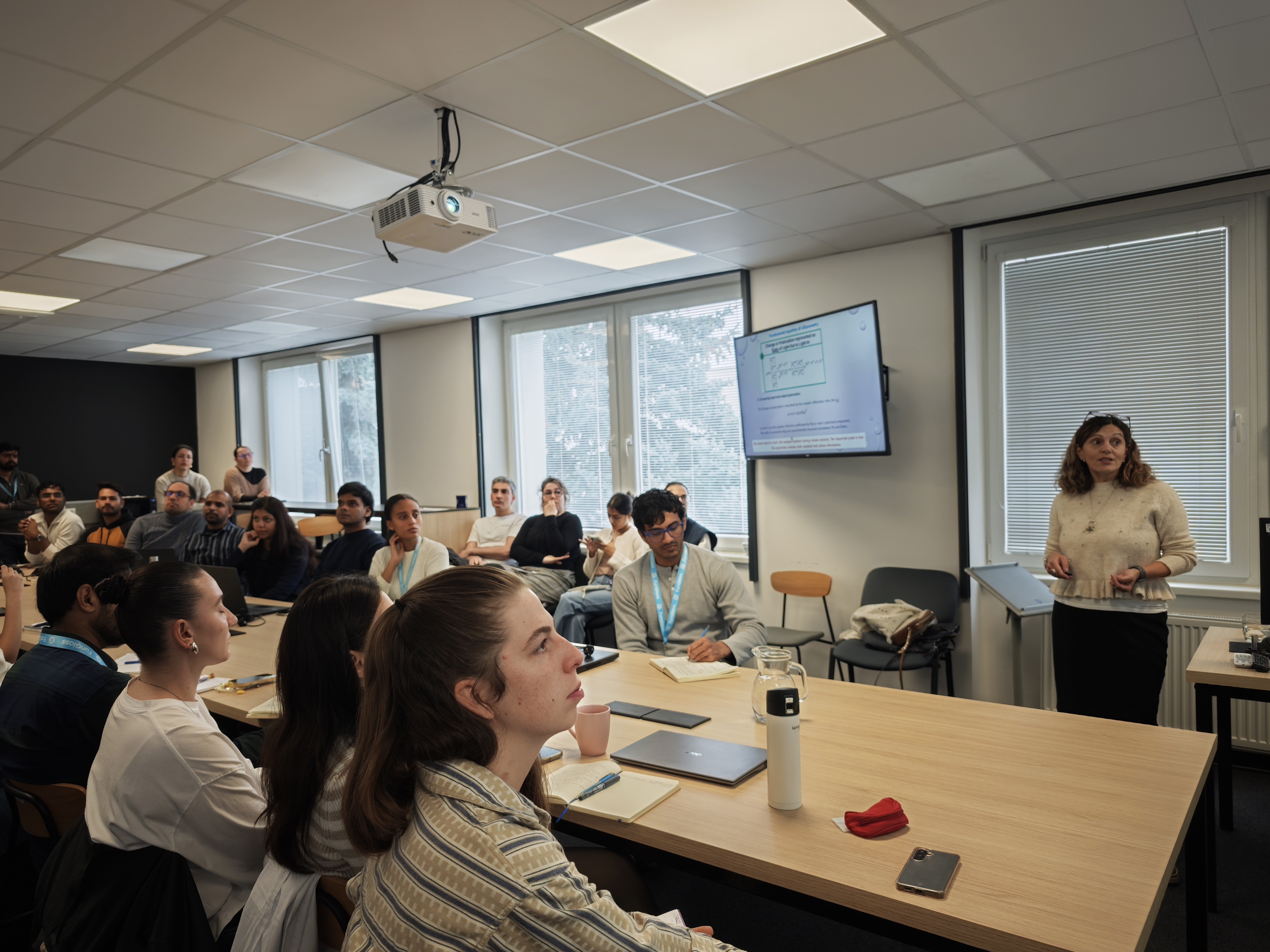
The course combined theoretical lectures with practical sessions, providing participants with an opportunity to explore the fundamentals of ellipsometry, become familiar with measurement techniques and instrumentation, and gain hands-on experience in data modelling and analysis. The programme covered a wide range of topics, including thin-film optics, spectroscopic ellipsometry, advanced optical models, complex multilayer structures, and the validation and interpretation of measurement results.
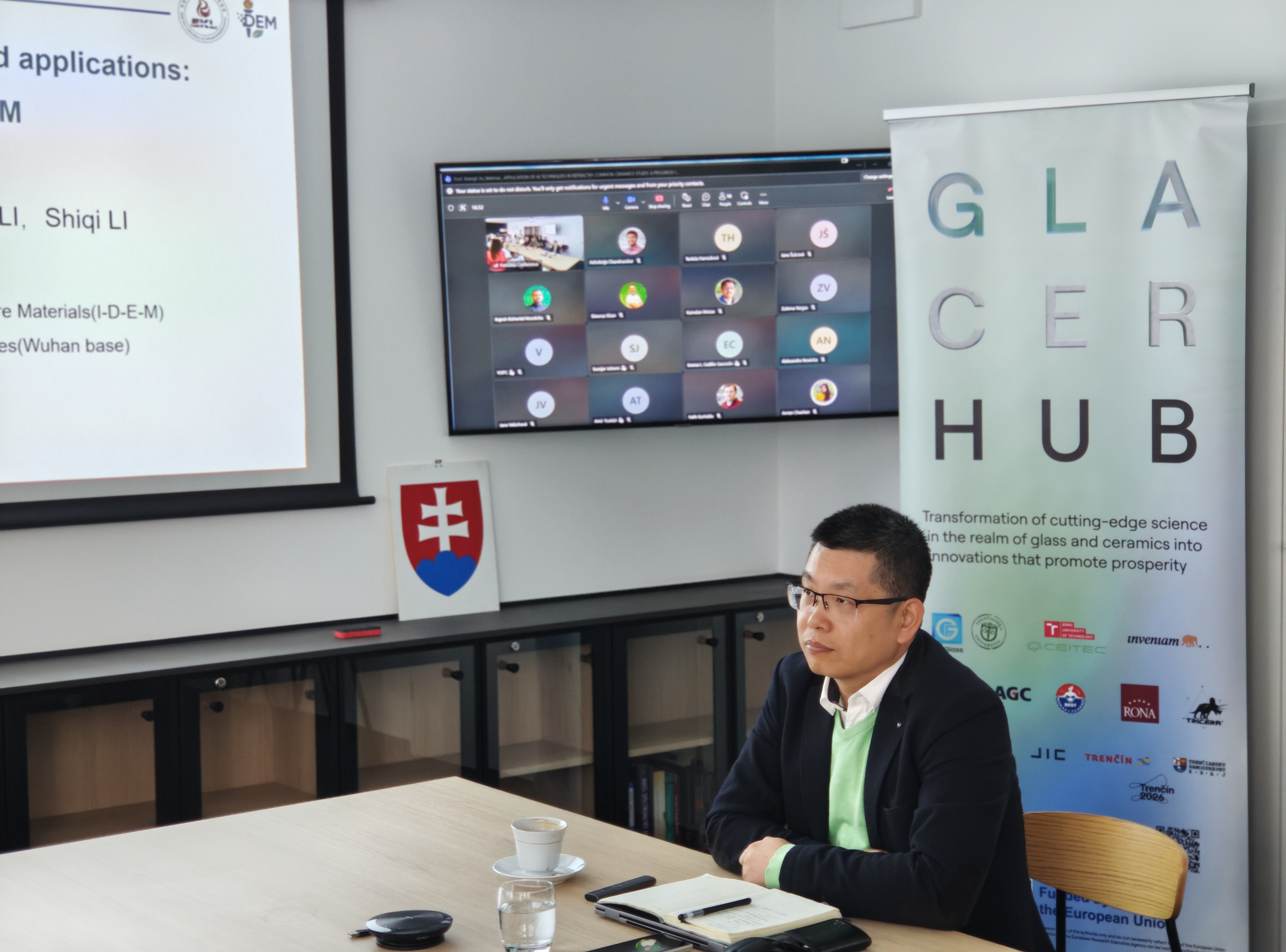
The training concluded on 29 October with an online webinar entitled "Ellipsometry: General Applications and Practical Use", delivered by Dr. Castro Martín. The webinar extended the reach of the training beyond FunGlass, allowing researchers and professionals from the GlaCerHub consortium and its wider innovation ecosystem to benefit from her expertise and explore the broader applications of ellipsometry in materials research.
Dr. Castro Martín is an experienced researcher specialising in sol-gel processing, multifunctional coatings, and advanced materials, particularly for applications in anticorrosion protection and photocatalysis. She is also a long-standing research partner of FunGlass, contributing to scientific collaboration and knowledge exchange between the institutions.
The training was made possible thanks to the GlaCerHub project, which supports knowledge sharing, skills development, and collaboration between research institutions and industry partners in the field of advanced glass and ceramic materials. Activities such as this training course contribute to strengthening research competencies, fostering international cooperation, and providing researchers with valuable expertise and practical skills.
We would like to express our sincere gratitude to Dr. Castro Martín for sharing her knowledge, expertise, and experience, as well as to all participants for their active engagement and valuable contributions. We hope that the knowledge and skills gained during the course will support their future research activities and encourage further scientific collaboration!
Other news
all news