CEITEC BUT Researchers Presented Advanced Ceramics Research and GlaCerHub Collaboration at Sintering 2026
The international conference brought together researchers and professionals working across the broad field of sintering science and technology and provided an important platform for sharing recent developments in advanced ceramic materials.
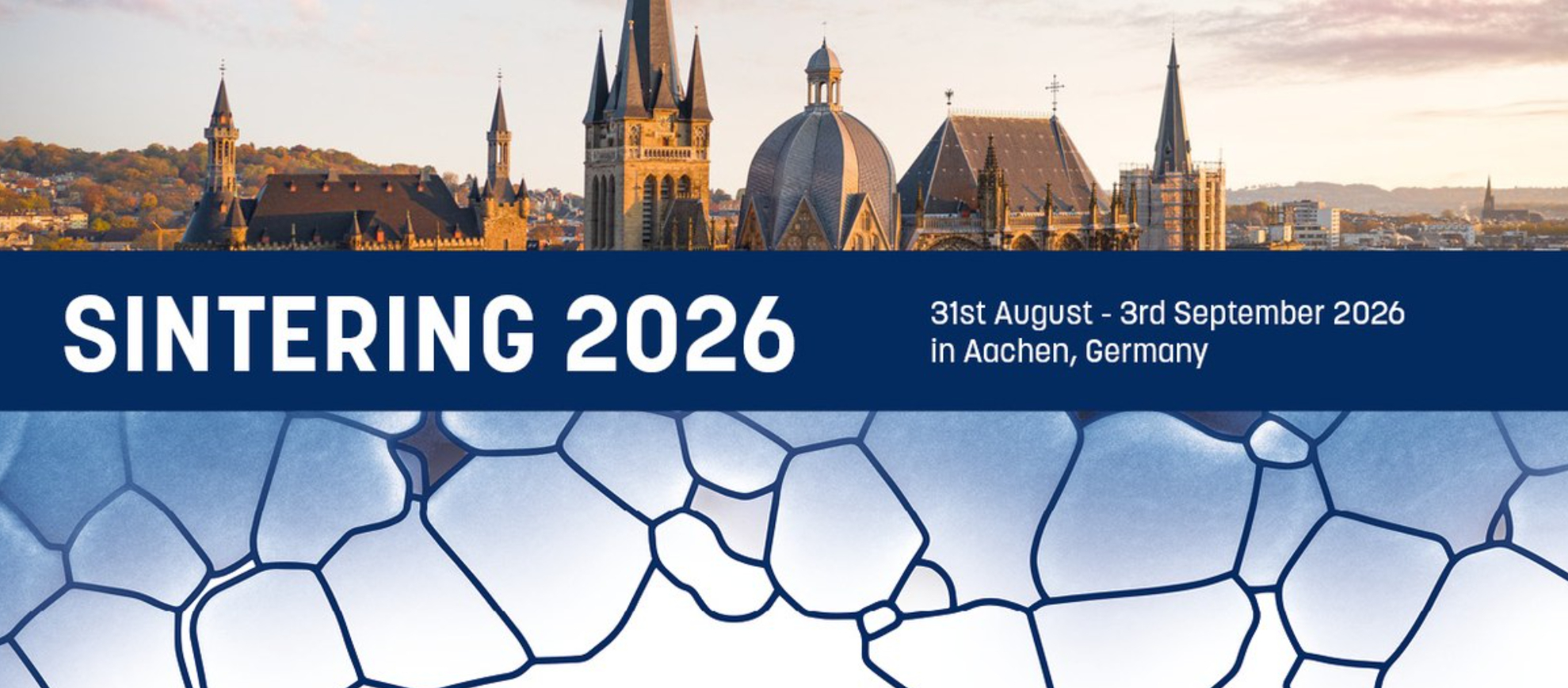
Researchers from the Advanced Multifunctional Ceramics group at CEITEC BUT presented their latest scientific results at Sintering 2026, held in Aachen, Germany, from 30 August to 3 September 2026.
CEITEC BUT was represented by Prof. Karel Maca, Assoc. Prof. Daniel Drdlík, Dr. Daniel Valášek and PhD student Tereza Havlíková, who presented research covering sintering kinetics, high-entropy ceramics and advanced processing approaches.
Prof. Karel Maca delivered the presentation “Non-Isothermal Approaches to Evaluating Sintering Activation Energy”, addressing methods for the evaluation of sintering behaviour under non-isothermal conditions.
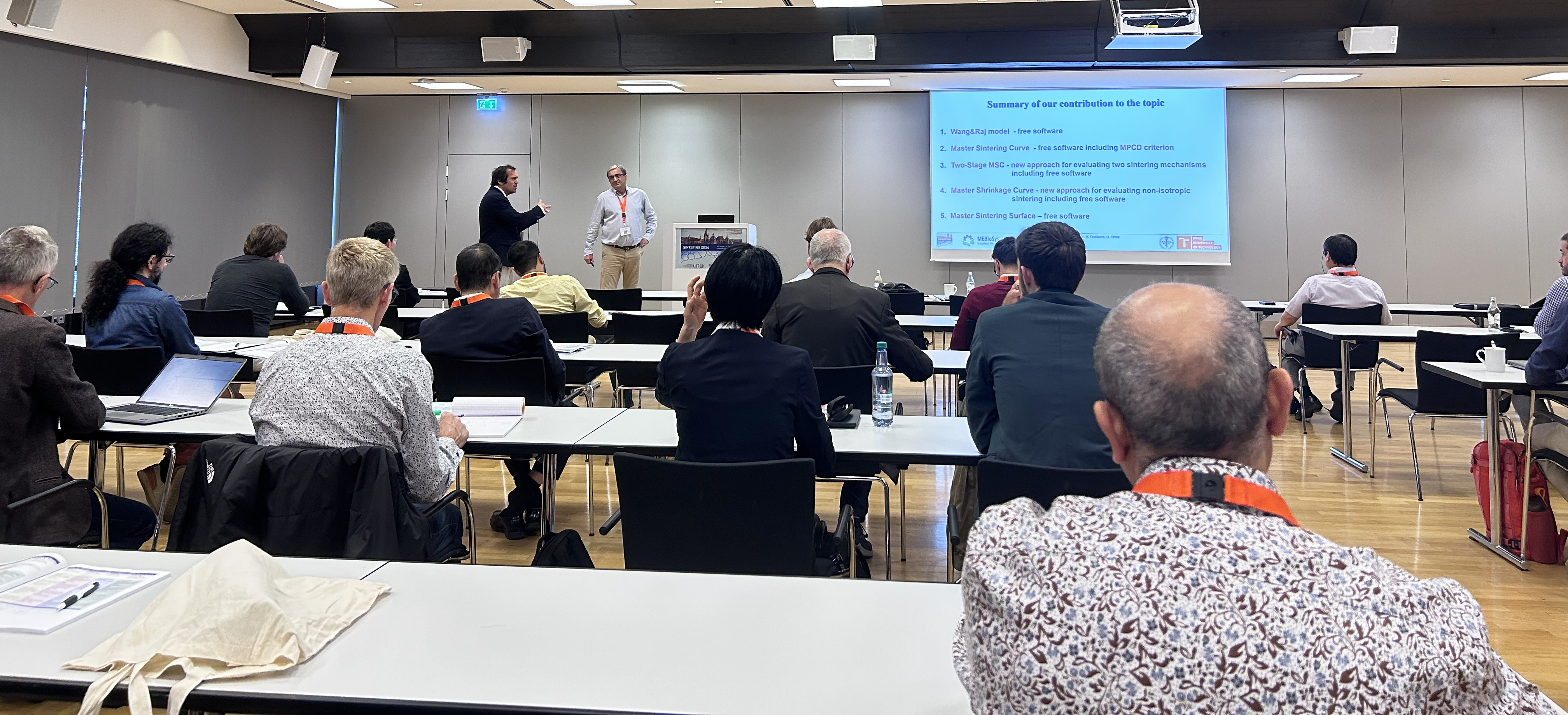
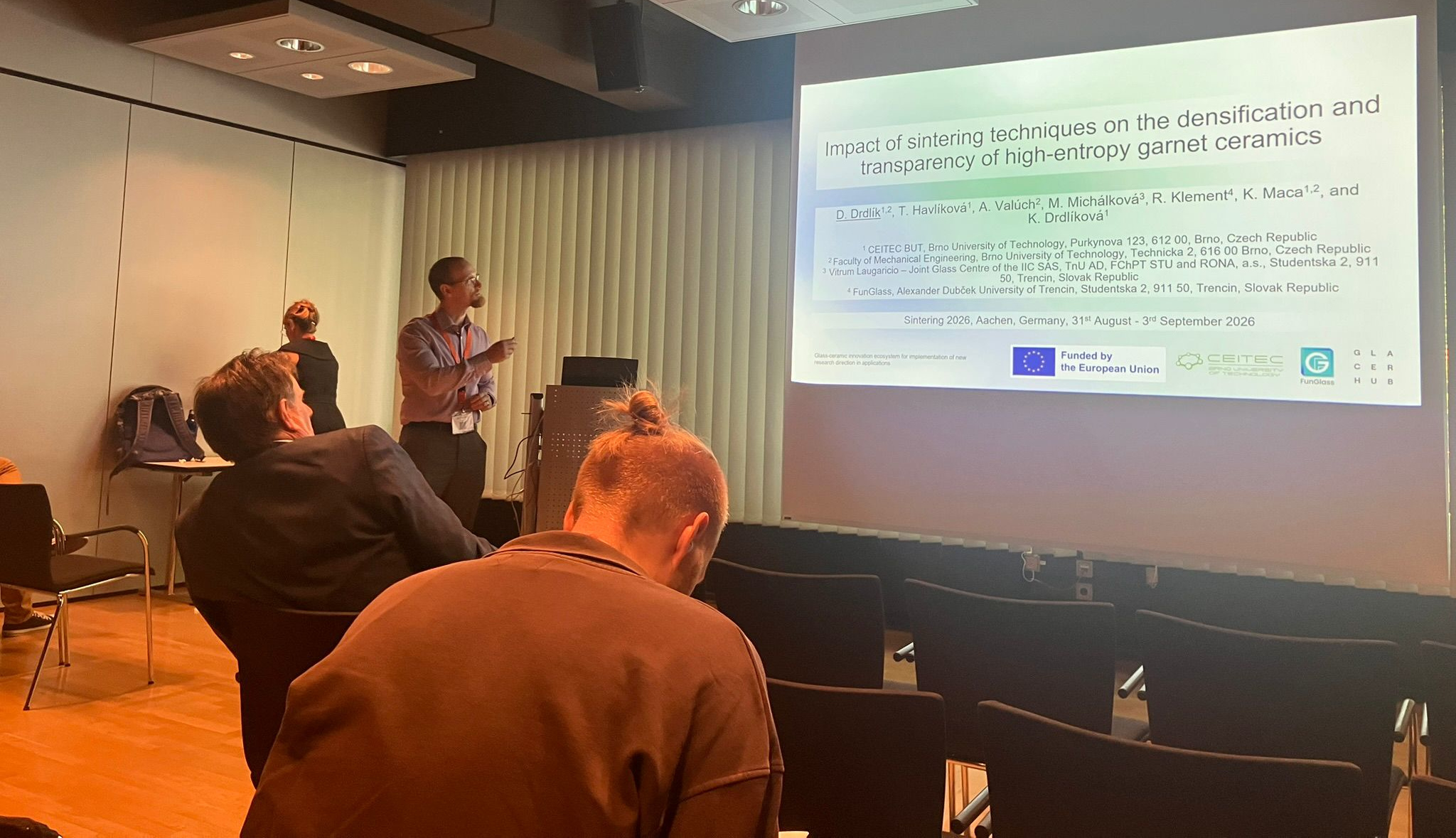
Assoc. Prof. Daniel Drdlík presented “Impact of Sintering Techniques on the Densification and Transparency of High-Entropy Garnet Ceramics”, focusing on the relationship between processing routes, densification and the optical properties of compositionally complex ceramic materials.
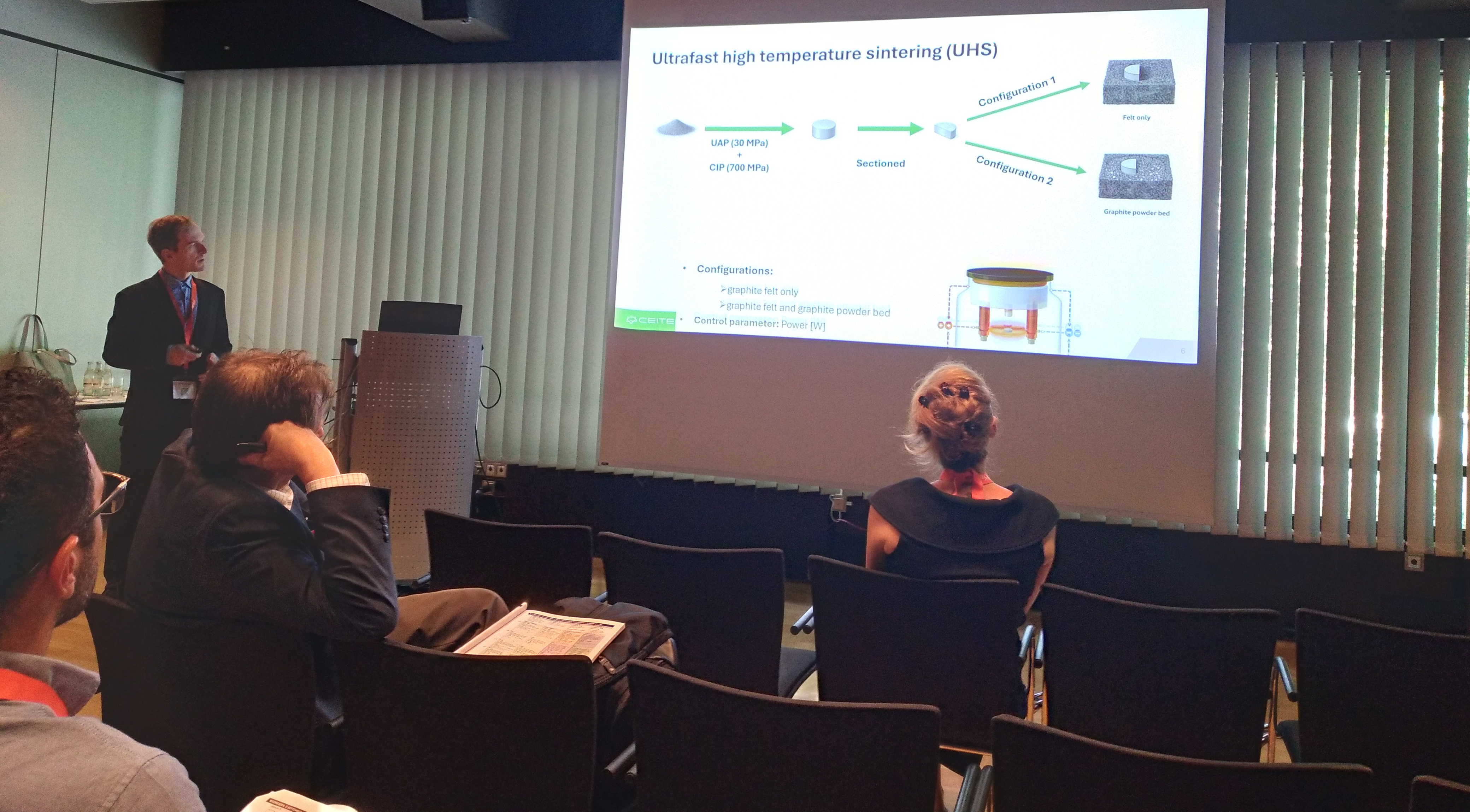
In his contribution “Preparation of (VNbTaMoW)C High Entropy Carbide from a High Entropy Alloy Using Different Sintering Techniques”, Dr. Daniel Valášek presented research into alternative processing routes for high-entropy carbide ceramics.
A particularly strong link to the GlaCerHub project was represented by the poster presented by Tereza Havlíková, entitled “Processing of High-Entropy Garnet Ceramics Towards Optical Transparency”. The work investigates the processing of transparent high-entropy garnet ceramics, including the use of sintering aids to support densification and the development of optical transparency.
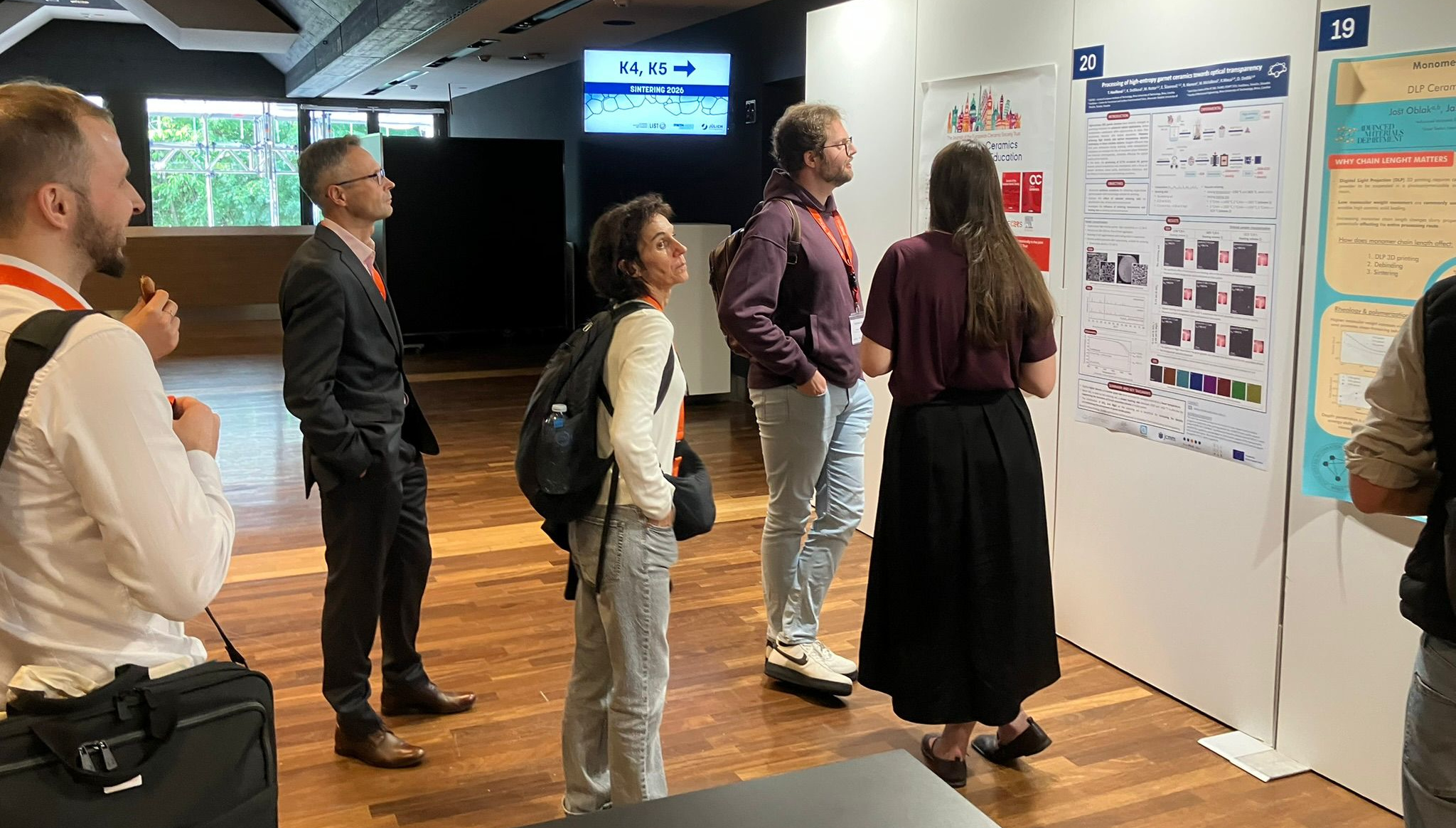
While the conference presentations were delivered entirely by researchers from CEITEC BUT, Tereza Havlíková’s contribution represents a concrete result of the scientific collaboration developed between CEITEC BUT and FunGlass – Centre for Functional and Surface Functionalized Glass at Alexander Dubček University of Trenčín within GlaCerHub. The study was co-authored by Katarina Drdlíková, Marek Rotter, Erik Ščasnovič, Róbert Klement, Monika Michálková, Karel Maca and Daniel Drdlík, bringing together expertise from the Czech and Slovak project partners.
The work is also closely connected with another important element of GlaCerHub: the cotutelle doctoral programme linking CEITEC BUT and FunGlass. Alongside Tereza Havlíková, the two other cotutelle PhD students, Marek Rotter and Erik Ščasnovič, contributed to the research presented in the poster. All three doctoral researchers conduct their studies jointly at the Czech and Slovak institutions, benefiting from shared supervision, research expertise and infrastructure.
This joint doctoral framework is one of the ways in which GlaCerHub strengthens long-term cross-border cooperation between Czechia and Slovakia, while giving young researchers direct experience of working within an international scientific environment.
The contributions presented at Sintering 2026 demonstrated the broad expertise of the Advanced Multifunctional Ceramics group at CEITEC BUT, ranging from fundamental sintering science to high-entropy carbides and transparent functional ceramics. At the same time, the jointly authored research presented by Tereza Havlíková illustrates how collaboration within GlaCerHub is translating into tangible scientific results and deeper integration between the participating Czech and Slovak research teams.
Other news
all news