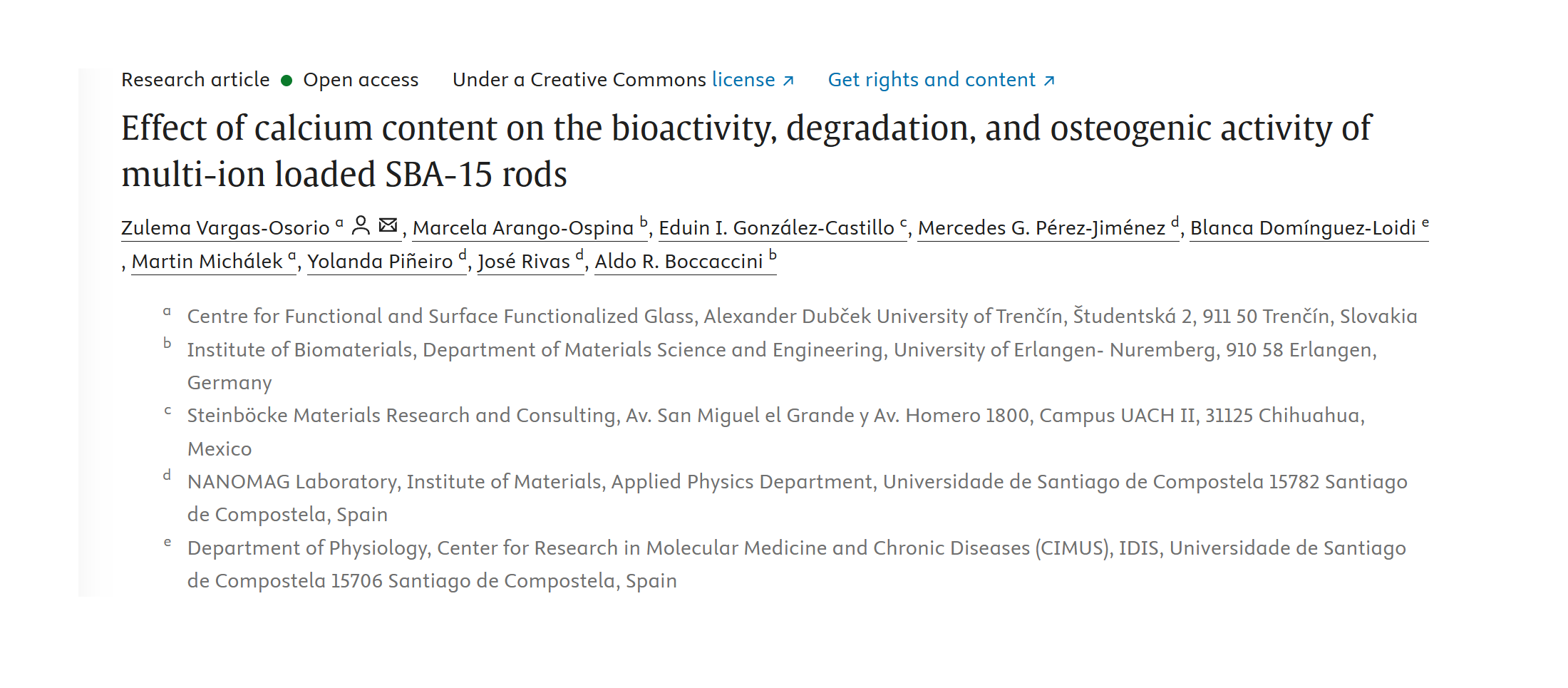
Effect of calcium content on the bioactivity, degradation, and osteogenic activity of multi-ion loaded SBA-15 rods
https://dx.doi.org/10.20517/microstructures.2026.58
SBA-15-based materials have attracted considerable attention for skeletal tissue regeneration owing to their tunable structure, high surface area, versatile functionalization capability, and osteogenic potential. In this study, SBA-15 particles loaded with multiple therapeutic ions were successfully synthesized using varying calcium (Ca2+) contents and fixed phosphate (PO43-) and copper (Cu2+) concentrations. Physicochemical characterization confirmed the incorporation and homogeneous distribution of the loaded species while preserving the structural integrity and textural properties of SBA-15. Elevated carbon levels detected in the modified samples may originate from residual carbon-containing species associated with the Cu/L-ascorbic acid (AsAc) complex. Bioactivity increased with Ca2+ content, promoting the rapid formation of crystalline hydroxyapatite (HAp)-like structures upon immersion in simulated body fluid (SBF). Following 30 days in Tris-HCl, the multi-ion-loaded materials exhibited controlled degradation and the development of additional nanoporosity, while the persistence of PO43- species suggested strong interactions with the SBA-15 framework. Although cell proliferation was lower than that of the control group, LDH assays confirmed the absence of cytotoxic effects. Notably, all ion-loaded systems promoted enhanced osteogenic differentiation, as evidenced by significantly increased ALP activity. These findings highlight multi-ion-loaded SBA-15 systems as promising bioactive and biodegradable platforms for ion-mediated bone and dental tissue engineering applications.
Other results
all results